
VK0EK Heard Island DXpedition – Antenna Teardown Begins as Operations Enter Final Phase
The VK0EK DXpedition to Heard Island is now entering its final operational phase, with the team beginning systematic teardown of antenna systems ahead of their planned departure window. As of the latest 2026 updates from the expedition site, activity on lower bands has been reduced, with 80-meter operations officially concluded and infrastructure on other bands being progressively dismantled due to worsening environmental conditions.
This marks a significant transition point for one of the most remote and technically challenging amateur radio expeditions ever undertaken in the sub-Antarctic region.
Harsh Conditions Accelerate Operational Wind-down
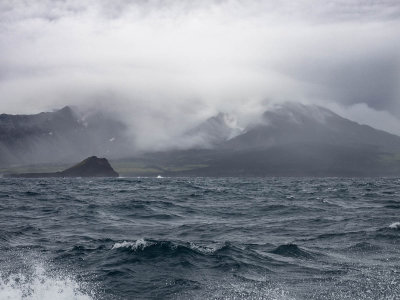
The team reports that rapidly deteriorating weather conditions are now directly impacting station capacity and antenna availability. Heard Island’s notoriously unstable climate has intensified, bringing sustained high winds exceeding 30 knots, persistent drizzle, snowfall, and slushy ground conditions that in some areas have reached shin-level water.
According to the latest field update from the operators:
“If earlier images of partially flooded antenna fields looked concerning, they were an early indication of what was to come. We are now operating in severe conditions with wind, snow, and waterlogged ground affecting both safety and infrastructure stability.”
Despite these challenges, the team continues to balance two priorities: maintaining on-air presence for as long as conditions allow, and safely recovering all deployed equipment before full evacuation procedures begin.
Antenna Systems Being Systematically Decommissioned
As part of the controlled shutdown process, several antenna systems have already been dismantled or reconfigured. The 80-meter vertical system has been fully removed, and the previously deployed 4-square array on 80 meters has been decommissioned.
On 40 meters, operations have been scaled back, transitioning from the full directional array setup to a simplified vertical configuration. This adjustment allows limited continued transmission while reducing maintenance demands on the ground crew operating in increasingly hazardous conditions.
Field reports confirm that:
- 80m vertical systems have been fully recovered
- 80m 4-square array has been dismantled
- 40m array reduced to vertical-only operation
- Multiple support structures are being staged for removal
The teardown process is being executed in phases to avoid sudden loss of communication capability while ensuring crew safety remains the top priority.
Reduced On-Air Activity and Operational Priorities
With fewer antennas available, the DXpedition’s operational footprint has significantly contracted. The number of active stations on air has been reduced, and operators are now focusing on maximizing efficiency during remaining propagation windows.
The team has also emphasized operational discipline for contacting stations. Given the limited time and reduced capacity, operators are prioritizing specific contact categories such as:
- All-Time New Ones (ATNOs)
- High-demand regions still missing VK0EK
- Time-sensitive propagation openings
A key operational reminder issued by the team highlights this shift in focus:
“Please follow operator instructions carefully. If a station is calling for ATNOs and you are already in the log, please stand by to allow others the opportunity.”
This reflects the increasingly strategic nature of the final operational phase, where every transmission cycle must be optimized for maximum global coverage impact.
Weather-Driven Operational Constraints
The environmental conditions on Heard Island continue to dictate the expedition timeline more than any logistical plan. Sudden weather shifts, including snow bursts and freezing rain, are affecting both antenna stability and ground mobility.
Operators report that low-band installations are particularly vulnerable due to flooding and unstable terrain, requiring additional recovery efforts under difficult circumstances.
Even so, the team continues to push operations forward as long as safety thresholds are met. Temporary weather windows are being used to maintain limited transmissions and to complete staged disassembly of remaining infrastructure.
Logging, Monitoring, and DXA Tracking
Despite reduced transmission capacity, logging continues to be actively maintained. Operators encourage participants to monitor real-time logging systems (such as DXA tracking tools where available) to confirm contacts and follow remaining on-air activity.
This transparency remains a key part of modern DXpedition standards, allowing global operators to track progress even as station availability decreases.
Final Stage of a Historic Expedition
As VK0EK moves toward full shutdown and departure preparations, the expedition is transitioning from an active multi-band operation into a controlled extraction phase. This stage is often the most physically demanding, as it requires dismantling large antenna systems under time pressure and adverse weather conditions while ensuring no equipment is left behind in one of the world’s most remote environments.
Despite the challenges, the VK0EK team continues to operate as long as possible, balancing scientific-grade operational discipline with the unpredictable reality of sub-Antarctic field conditions.
The VK0EK Heard Island DXpedition is now firmly in its closing chapter. With 80-meter operations completed, reduced 40-meter capability, and progressively worsening weather, the focus has shifted from maximum on-air presence to safe, structured dismantling of all systems.
Even in its final phase, the expedition remains active on air whenever conditions allow, continuing to serve DX operators worldwide while carefully executing one of the most logistically complex amateur radio shutdowns in recent years.