
Heard Island and McDonald Islands Set for Major Scientific Voyages After Two Decades of Limited Research
The Australian Antarctic Program is preparing for two major research voyages to Heard Island and McDonald Islands (HIMI), marking the most significant scientific return to the remote sub-Antarctic territory in more than 20 years. The expeditions aim to assess the condition of one of the world’s most isolated and ecologically significant environments.
Voyage One is scheduled to depart in September, followed by Voyage Two in November, bringing together an interdisciplinary team of scientists to study wildlife, ecosystems, and environmental change across the islands and surrounding Southern Ocean.
A Remote and Extreme Wilderness
Located roughly 4,000 kilometres southwest of mainland Australia and about 1,700 kilometres north of Antarctica, Heard Island and McDonald Islands form one of the most isolated landmasses under Australian jurisdiction. The region sits deep within the Southern Ocean, where weather conditions are notoriously harsh and access is extremely limited.
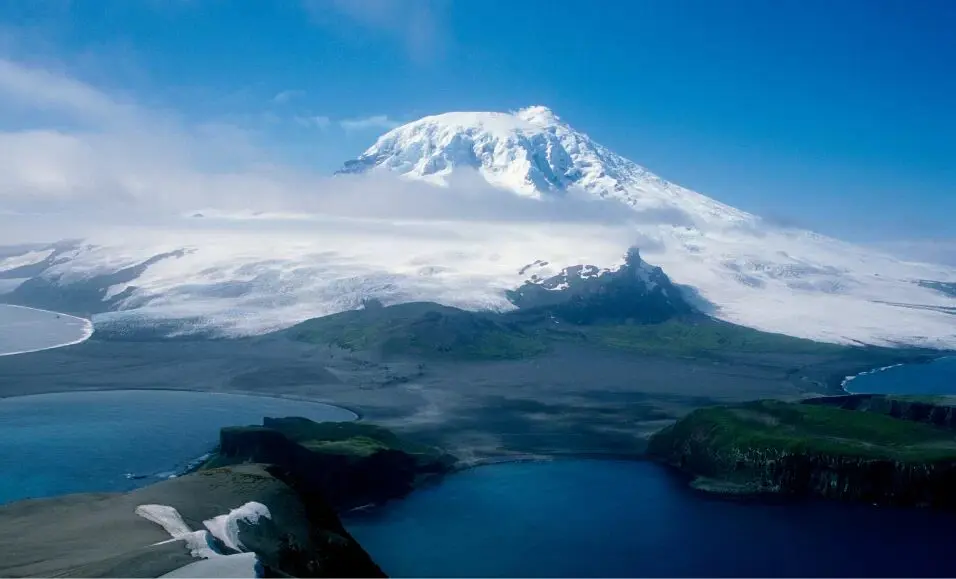
Heard Island is dominated by Big Ben, an active volcanic massif rising more than 2,800 metres and permanently covered in glaciers. The surrounding McDonald Islands form a smaller, geologically active archipelago nearby.
Together, the islands represent a rare example of a largely untouched sub-Antarctic ecosystem, where natural processes continue with minimal human interference. The area has been recognized as a UNESCO World Heritage site due to its exceptional geological features and biodiversity value.
A Global Stronghold for Wildlife
The islands support an extraordinary concentration of wildlife, including large colonies of penguins and seals. Species such as elephant seals, Antarctic fur seals, and various penguin populations depend on the region as breeding and feeding grounds.
The surrounding marine environment is equally rich, hosting whales, seabirds, and diverse invertebrate life, including octopus and sea urchins adapted to extreme cold-water conditions. Many of these species are found in few other places on Earth.
Vegetation on the islands is also uniquely adapted to sub-Antarctic conditions, including cushion plants, tussock grasses, mosses, and cabbage-like flora. The ecosystem also supports specialized insects and invertebrates, including endemic weevils that have evolved in isolation.
First Major Scientific Return in Decades
The upcoming campaign represents the first large-scale scientific presence in the region in over 20 years. Researchers will assess how the ecosystems have changed over time, particularly in relation to climate change, glacier retreat, and limited human activity.
The Australian Government has also recently expanded the marine reserve surrounding the islands, significantly increasing the protected area in an effort to safeguard critical habitats for marine mammals and seabirds.
Scientific Goals of the Expedition
A team of twelve researchers from the Securing Antarctica’s Environmental Future (SAEF) initiative will participate in the voyages, primarily joining the second expedition in November. The group includes early-career scientists such as postdoctoral researchers, PhD candidates, and research officers from leading Australian institutions including Monash University, QUT, James Cook University, and the University of Adelaide.
Their research program is broad and multidisciplinary, focusing on both terrestrial and marine systems. Key objectives include:
- Mapping biodiversity across land and ocean ecosystems
- Assessing ecological changes driven by climate change and glacier retreat
- Investigating the impact of non-native species on fragile habitats
- Using environmental DNA to reconstruct the evolutionary and climatic history of the region
- Employing drones, multispectral imaging, and AI tools to improve vegetation mapping
- Comparing current ecological conditions with historical data collected two decades ago
- Providing updated scientific evidence to support conservation and environmental management strategies
Collaboration Across Institutions
The HIMI campaign is being delivered by the Australian Antarctic Division in partnership with multiple scientific and governmental organizations. These include SAEF, Serco, the Bureau of Meteorology, the University of Tasmania, the Institute for Marine and Antarctic Studies, the Department of Defence, the Sydney Institute of Marine Science, the Australian Border Force, and the Australian Fisheries Management Authority.
A Critical Window for Understanding Change
Researchers emphasize that these expeditions represent a rare opportunity to study one of the least disturbed ecosystems on the planet. With accelerating climate change and increasing biological threats such as disease and invasive species, the data collected during these voyages will be essential for understanding how sub-Antarctic environments are evolving.
The results are expected to inform long-term conservation strategies and strengthen Australia’s scientific presence in one of the most remote regions on Earth.